Historic Baçaim: An Introduction
Today’s Vasai-Virar area has rapidly changed and starting in the 1980′s, the change is brought about by a large influx of people due to availability of more affordable housing than in Mumbai (Bombay). History of Vasai dates back to Puranic ages. The present day name of Vasai originates from Sanskrit, Sanskrit word “waas” meaning dwelling or residence. The name was changed to Basai by Muslims who occupied Vasai before the Portuguese. The Portuguese named it Baçaim. The Marathas renamed it Bajipur. The British named it Bassein and today it is called Vasai. The most significant past in Vasai’s history is the rein of the Portuguese, since they largely influenced or changed to what Vasai-Virar area is today. Historically, the entire region has attracted traders and merchants from Rome, Greece and Middle East. (Note: Bassein, Bombay are interchangebly used for Vasai and Mumbai)
Early History
- The Chalukya Empire (543–1189 AD) : During these early centuries, the territory was ruled by the Badami Cha lukyas of Karnataka, who integrated the Konkan coastline into their expansive trading networks
- The Silhara Dynasty (approx. 810–1260 AD): The North Silharas, ruling from nearby Thane, established deep economic foundations in Vasai. They patronized maritime trade and built numerous stone temples throughout the region.
- The Seuna (Yadava) Dynasty (1184–1317 AD): The Yadavas of Devagiri eventually absorbed the Konkan territory. It was under the Yadavas that Vasai served as a formal head of the district. Historians note that the earliest layout of a defensive citadel or fortification at the site was established during this period. This was the flourishing, merchant-heavy India that Marco Polo sailed past in the early 1290s.
- The Islamic Era: The Gujarat Sultanate (1317–1534 CE)
- Sultanate Conquest: As the Yadava Dynasty collapsed under invasions from the Delhi Sultanate, control of the northern Konkan shifted. By the 15th century, the region was firmly held by the Gujarat Sultanate
In 1295 AD the famous Marco Polo visited and passed through Thana/Vasai area on his return journey to Venice and while In escorting a Mongol princess to Persia, who was to marry Persian prince.
Long before the Portuguese arrived earliest historical reference to Christianity in Bombay comes from a Greek merchant, Cosmas Indicopleustes. He writes about a community of Nestorian Christians in Thane/Kalyan served by a Bishop appointed in Persia in the 6th Century.
In 1320 or 1321, Friar Jordanus set out by sea from Persia alongside a group of four Franciscan friars—Thomas of Tolentino, James of Padua, Peter of Siena, and Demetrius (a lay interpreter). Their original destination was China to join the Roman Catholic mission established by John of Montecorvino.
However, severe weather and shifting shipping routes forced them to alter their plans, causing them to disembark at the port city of Thana on Salsette Island. Upon landing, they discovered a small, long-established pocket of Nestorian Christians (members of the indigenous Church of the East) living among the local Hindu and ruling Muslim populations.
When the missionaries arrived, they were warmly received and taken in by a local Nestorian Christian family. Jordanus temporarily left the group to go preach and minister to another small Christian community in nearby Sopara (Nallasopara).
During his absence, a domestic dispute in the Nestorian household where the Franciscans were staying inadvertently triggered a disaster: The head of the house quarreled with his wife and beat her. The wife complained to the local Muslim magistrate (qadi). The Franciscan friars were summoned as witnesses to the domestic dispute. While in court, the conversation quickly shifted from the domestic incident to religion. When questioned about their beliefs, the unbending Franciscans openly challenged Islam and spoke controversially about Muhammad.
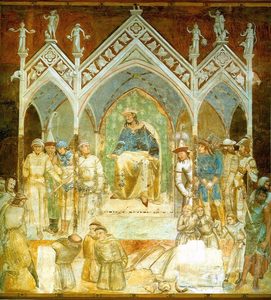
This public theological defiance under the local administration led directly to the arrest and execution of Jordanus’s companions on April 7, 1321. They became celebrated in Catholic history as the Four Martyrs of Thana.
The Portuguese with their naval power and their crusading valor were unquestioned masters of the Indian Ocean. When the Portuguese arrived, Bassein was under the rule of Bahadur Shah, the Sultan of Gujarat.
In 1530, Portuguese army captain António da Silveira led a campaign to weaken the regional stronghold of the Gujarat Sultanate. His forces pillaged and burnt the city of Bassein (Vasai) before moving south to loot nearby Bombay (Mumbai). Faced with this devastating naval warfare, the Sultan Bahadur Shah of Gujarat (Thane) capitulated and surrendered the islands of Mahim and Bombay to Portuguese control. This critical event served as a major stepping stone toward deeper European entrenchment on India’s western coast.
Historical Context & Aftermath
Escalating Pressure: The 1530 raid was not an isolated incident. The Portuguese burned Bassein again in 1531 to punish the Sultan for refusing to cede Diu, and launched further coastal attacks in 1533.
Sultan Bahadur Shah of Gujarat recognized that the Portuguese were aggressively targeting his coast. In response, he ordered Malik Tokan (the son of the governor of Diu) to fortify Bassein. Malik Tokan constructed a formidable citadel, reinforced the ramparts facing both the sea and the creek, dug a protective salt-water ditch, and garrisoned the site with 15,000 troops (both cavalry and infantry).
Portuguese Governor-General Nuno da Cunha met this massive threat with distinct tactical calculations.
1. Assembling a specialized, Amphibious Fleet
- Force Composition: Da Cunha assembled a massive fleet of 150 vessels carrying 4,000 men. Crucially, half of his soldiers were highly disciplined European shock troops, and the other half were regional Goan auxiliary forces well-accustomed to shallow-water maneuvering.
- Psychological Warfare: Upon arrival, Da Cunha offered peace terms so severe that Malik Tokan was forced to reject them. This refusal gave the Portuguese a pretext for a total assault while intentionally keeping the garrison pinned behind their walls.
2. Flanking the Fortifications
- The Landing: Rather than attempting a costly frontal naval bombardment against the heavily fortified sea walls, Da Cunha exploited a geographical vulnerability. He moved his fleet slightly north of the main citadel to execute an amphibious landing where the defensive lines were thinnest.
- The Vanguard Assault: The vanguard, led by captains Diogo de Silveira and Manuel de Macedo, immediately rushed the landward walls. Equipped with scaling ladders, they mounted the ramparts before the defenders could reposition their heavy artillery.
3. Exploiting Panic and Disarray
- Aggressive CQC (Close Quarters Combat): Despite being heavily outnumbered, the Portuguese vanguard utilized a relentless, fast-paced infantry charge. The shock value of European firearms and armored swordsmen attacking from an unexpected flank broke the morale of the garrison.
- The Rout: The defenders fell into absolute panic and fled the citadel, leaving behind a vast treasury of provisions, horses, and gunpowder.
4. Denying Re-Occupation (The Scorched Earth Strategy)
- Demolition: Because Nuno da Cunha did not have enough spare troops to leave behind a permanent garrison, he executed a classic defensive denial tactic. He ordered the newly built citadel to be razed entirely to the ground so the Sultanate could not use it as a military base again.
- Artillery Spoils: The Portuguese sailed back to Goa carrying 400 captured pieces of artillery, effectively disarming the Sultanate’s northern coastal defenses.
The Geopolitical Domino Effect
Left completely defenseless on the coast, stripped of 400 cannons, and facing a simultaneous land invasion from Mughal Emperor Humayun, Sultan Bahadur Shah realized he was completely cornered. This decisive tactical defeat at Bassein is exactly what forced him onto the Portuguese galleon São Mateus in December 1534 to sign away Bombay and Bassein in exchange for a military alliance.
On 23 December 1534, the Sultan of Gujarat (Bahadur Shah), signed a treaty with the Portuguese (represented by Nuno da Cunha) on board the galleon São Mateus and ceded Bassein with its dependencies of Salsette, Mombaim (Bombay/Mumbai), Parel, Vadala, Siao (Sion), Vorli (Worli), Mazagao (Mazgao), Thana, Bandra, Mahim, Karanja (Uran).
Why was 1534 Treaty Signed
- Mughal Threat: Bahadur Shah faced severe pressure and military expansion from the Mughal Emperor Humayun.
- Portuguese Attacks: Continuous naval raids and destruction along the Gujarat coast by Portuguese captains weakened the Sultanate’s defenses.
- Search for Allies: The Sultan sought naval superiority and military protection from the Portuguese against the Mughals.
Major Terms of the Treaty
- Territorial Cession: The Sultan gave the strategic town of Bassein (Vasai), its dependencies, and the nearby islands (including the future islands of [Bombay/Mumbai]) to the Portuguese.
- Naval Assistance: The Portuguese agreed to support the Sultan with their naval fleet against his adversaries.
- Trade Regulations: Control over regional shipping lanes was granted, requiring local vessels to secure Portuguese sea passes (cartazes).
Aftermath of the Treaty
- A follow-up agreement in October 1535 allowed the Portuguese to build a major fortress at Diu.
- The Incident in 1537
- The Meeting: Amid mutual distrust and strategic maneuvers, Bahadur Shah visited the Portuguese viceroy’s ship off the coast of Gujarat.
- The Death: A violent confrontation broke out during the negotiations, resulting in Bahadur Shah’s death by drowning or physical attack, and his body was thrown into the Arabian Sea.
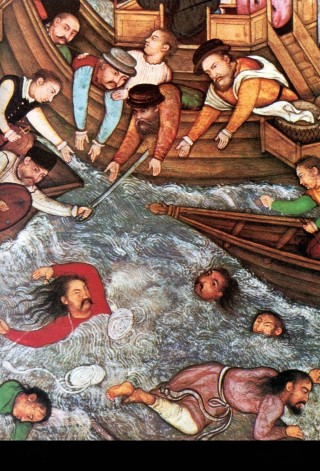
In 1536, Nuno da Cunha appointed his brother-in-law Garcia de Sá as the first Captain/Governor of Bassein. The first corner stone for the Fort was laid by Antonio Galvao. In 1548 the Governorship of Bassein was passed on to Jorge Cabral.
The Bassein region ruled by Portuguese in not just Bassein but included areas far away as Bombay, Thane, Kalyan and Chaul (Revdanda) It is located about 50 Kilometers North of Bombay, on the Arabian Sea, at approximately (19°20′N – 72°49′E). Bassein, was important trading center, it’s sources of wealth and trade were horses, fish, salt, timber, stone quarry (basalt and granite) and shipbuilding. It was a significant trading center long before the Portuguese arrived. (Ancient Sopara was a important port in trade with the Arabs and Greeks, Romans and Persians.). It was also a wealthy agricultural region with rice, betel nut, cotton, and sugar-cane as some of the crops.
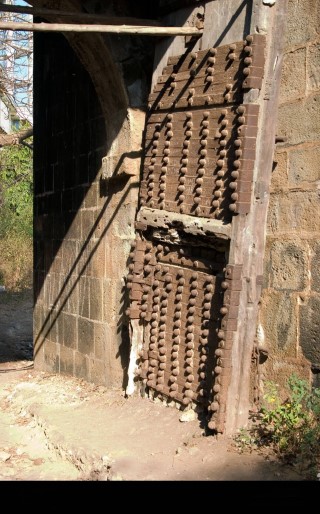
In the second half of 16th century the Portuguese built a new fortress enclosing a whole town with in the fort walls. The fort included 10 bastions, Cavallerio (Cavalheiro) Nossa Senhora dos Remedios Reis Magos Santiago, São Gonçalo, Madre de Deos (Madre de Deus), São João, ElefanteSão Pedro, São Paulo, São Sebastião (The main bastion and entrance gateway, colloquially referred to as Porta Pia or the “Pious Door”). It was through this bastion that the Marathas would enter to defeat the Portuguese. There were two medieval gateways, one on seaside called Porta do Mar with massive teak gates cased with iron spikes and the other one called Porta da Terra.
Within the fort there were ninety pieces of artillery, 27 of which were made of bronze and seventy mortars, 7 of these mortars were made of bronze. The port was defended by 21 gun boats each carrying 16 to 18 guns. This fort stands till today with the outer shell and ruins of churches.
In 1548, St. Francisco Xavier stopped in Bassein, and a portion of the Bassein population was converted to Christianity. They built 9 historical churches: Nirmal (1557): Holy Cross Church – Built near the historic Nirmal Lake, Remedi (1557): Our Lady of Remedy Church – Located in Remedios, Sandor (1566): St. Thomas Church – One of the largest and oldest active parishes in the area, Agashi (1568): St. James the Apostle Church – Located in northern Vasai, Nandakhal (1573): The Holy Spirit Church, Papdi (1574): Our Lady of Grace Church – Situated in Papdi, Pali (1595): Our Lady of Lourdes Church – Located in Pali, Manickpur (1606): St. Michael the Archangel Church, Merces (1606): Our Lady of Mercy Church – Located in Merces.
Unlike the ruins inside the Vasai Fort (such as the Church of the Holy Name of Jesus or St. Joseph’s Cathedral), which were abandoned after the Maratha conquest in 1739, these 9 suburban parish churches were spared total destruction or were faithfully rebuilt by the local community over the centuries. They blend Portuguese-Baroque architecture with local Indian structural elements.
In the second half of 16th century the Portuguese built a new fortress enclosing a whole town with in the fort walls. The fort included 10 bastions, of these nine were named as: Cavallerio, Nossa Senhora dos Remedios, Reis Magos Santiago, São Gonçalo, Madre de Deos, São Joaõ, Elefante, Saõ Pedro, Saõ Paulo and São Sebastião, São Sebastião was also called “Potra Pia” or pious door of Bassein. It was through this bastion that the Marathas would enter to defeat the Portuguese. There were two medieval gateways, one on seaside called Porta do Mar with massive teak gates cased with iron spikes and the other one called Porta da Terra.
Unlike the ruins inside the Vasai Fort (such as the Church of the Holy Name of Jesus or St. Joseph’s Cathedral), which were abandoned after the Maratha conquest in 1739, these 9 suburban parish churches were spared total destruction or were faithfully rebuilt by the local community over the centuries. They blend Portuguese-Baroque architecture with local Indian structural elements.
The milestone year of 1573 stands as a pivotal turning point in the history of Vasai (Bassein). It marked the transition of the local Christian population from a small, fort-bound minority into a massive, thriving suburban community. The sudden, sweeping acceleration of the faith during this single year is defined by several key historical dynamics:
The Building of Nandakhal (Holy Spirit Church)
Before 1573, Portuguese missionary activity was largely concentrated inside the heavily fortified walls of Fort Bassein. However, as thousands of people living in the northern agrarian plains of Vasai expressed a willingness to convert, the missionaries realized they needed a spiritual base outside the fort.
- In 1573, they established Holy Spirit Church in Nandakhal.
- This church was built specifically to serve as a suburban hub for the influx of new converts, saving them from having to make the long trek to the fort’s main gates for mass or sacraments.
- Strategic “Mass Baptisms” (1,600 in One Year)
The baptism of 1,600 individuals in 1573 was not accidental; it was a highly organized corporate event. Portuguese records from the era show that missionaries targeted entire agrarian and artisan castes—such as local farmers, salt-panners, and fishermen. By converting whole families and occupational guilds at the same time, the Church successfully prevented the social isolation or caste ostracization that usually happened when a single individual converted.
The Role of the “Pai dos Cristãos” (Father of Christians)
The massive logistical feat of 1573 was directed by a specific official known as the Pai dos Cristãos. This official was responsible for managing the sudden surge of new converts:
- Catechism Houses: He managed temporary housing and communal kitchens where the 1,600 catechumens were fed and taught basic prayers before their baptism day.
- The “Christian Dress”: To mark their new identity, the Pai dos Cristãos was legally mandated to provide clean, dignified “Christian clothing” to every single one of the 1,600 individuals on their baptism day, tailored slightly to respect their traditional trade and status.
Cultural Genesis of the Samvedi (“Kupari”) Christians
This exact milestone year laid the foundations for the Kupari community (a distinct subset of the modern East Indian Catholics). Because such an enormous volume of people converted together in 1573, they did not lose their cultural heritage. They adopted Christian theology but fiercely held onto their ancestral roots, language, and unique dress styles—creating a beautifully blended culture that still thrives in the villages surrounding Nandakhal today.

This seal in the fort indicates the nature of Portuguese mission in the territories they held. The cross indicates spread of Christianity, crown for expansion of territory under their control and the globe for worldwide commerce and trade. As Bassein prospered under the Portuguese, it came to be known as “a Corte do Norte” or “Court of the North”, it became a resort to “fidalgos” or noblemen and richest merchants of Portuguese India.
Bassein became so famous that a great Portuguese man would be called “Fidalgo ou Cavalheiro de Baçaim” or Nobleman of Bassein. The dwellings of the Hidalgos, or aristocracy, who alone were allowed to live within the city walls, are described (I675) as stately buildings, two stories high, graced with covered balconies and large windows.
Bassein during the Portuguese period was known for the refinement and wealth and splendor of it’s buildings, palaces and for the beauty of it’s churches. This Northern Province, included a territory which extended as far as 100 kilometres along the coast, between Damao (Daman) and Bombay, and in some places extended for 30-50 kilometres inland. It was the most productive Indian area under Portuguese rule.
From 1611, Bassein and the whole region under the Portuguese had a mint or “Casa da Moeda”. These old coins were found occasionally during digs and were locally called “Firgi paisa”.

The Bassein mint struck coins using local and imported metals to fuel regional trade networks spanning from Goa up to Daman and Diu. These coins usually featured distinct colonial and religious symbols:The Cross of Christ: The iconic symmetric cross used by Portuguese maritime explorers was stamped on many coins.The Royal Coat of Arms: The stylized shield of the Portuguese Crown.The Monogram of the Mint: Coins struck locally often carried specific mint marks to distinguish them from currency minted in Goa, Lisbon, or Malacca.
The establishment of the mint in 1611 marked the height of Bassein’s administrative independence. However, just as the local economy peaked, the region was hit by the Disasters of 1618. In 1618 Bassein suffered from a succession of disasters. First it was struck by a disease then on May 15, the city was struck by a deadly hurricane/cyclone. It caused considerable damage to the boats, houses and thousands of the coconut trees were uprooted and flattened. The winds pushed sea water into the city. The monasteries and convents of the Franciscans and Augustinians were ruined. The roofs on three largest churches in the city and both the house and the church of the Jesuits were ripped off and ruined almost beyond repair. This storm was followed by so complete a failure of rains which resulted in near famine conditions. In a few months the situation grew so precarious that parents were openly selling their children to Muslim brokers into slavery rather than to starve them to death. The practice was stopped by the Jesuits, partly by saving from their own scanty allowances partly by gifts from the rich.
The 1634 Population Breakdown:
A Highly Stratified SocietyThe census of 1634 reveals a stark, three-tiered social pyramid that drove the local economy:400 Portuguese Families: These were the Casados (married settlers) and Fidalgos (nobles). They held all administrative, military, and trade power, living in luxury inside the grand stone mansions of the fort.200 Christian Indian Families: This represented the elite, urbanized native population living close to or within the city walls. They often served as translators, clerks, merchants, and high-level artisans. (Note: This count strictly refers to the families inside or immediately surrounding the main city, separate from the thousands of indigenous agrarian Christians, like those in Nandakhal, living in the wider district).1,800 Slaves: This massive number highlights the dark economic engine of the colony. The Portuguese operated a vast Indian Ocean slave trade, bringing enslaved people primarily from their East African territories (such as Mozambique). These individuals were used for heavy physical labor, building the fort walls, working the salt pans, and acting as domestic servants for Portuguese nobles.
The 1674 Institutional Boom:
The Spiritual Capital, By 1674, just a few decades before the Maratha conflict, Bassein’s religious infrastructure had reached its absolute zenith: 2 Colleges: These were prestigious centers of higher learning that made Bassein an intellectual hub. The most famous was the Jesuit College of the Holy Name (attached to the Church of the Holy Name of Jesus), which taught Latin, rhetoric, theology, and medicine to students from across Asia. 4 Convents: These vast complexes housed monastic orders that managed both spiritual life and massive tracts of revenue-generating agricultural land. They belonged to the dominant Catholic orders of the era: the Franciscan Friars, the Jesuits (Society of Jesus), the Dominicans, and the Augustinians. 6 Churches (Within the fort City): These were the massive, ornate stone churches built inside the fort walls, distinct from the suburban parish churches mentioned earlier. They included monumental structures like the Cathedral of St. Joseph and the Church of St. Anthony.
At the end of 17th century Bassein reached the height of the prosperity. In 1675, Dr. Fryer who came to treat the daughter of the Captain of Bassein, João Mendes, reports that the Captaincy of Bassein was rotated between certain descendants of the conquerors of Bassein. The Fidalgo Class: The Captaincy of the fort was not handed out by merit or open military assignment; instead, it was tightly rotated among a handful of wealthy families who were direct descendants of the original 1534 Portuguese conquerors (Descendentes dos Conquistadores). The local governance became an elite, closed loop where wealth, land grants (aforamentos), and political power were kept strictly within local noble dynasties.
The Catastrophe of 1695:
The Great Plague The sheer scale of the 1695 plague altered the course of the colony’s history. Losing one-third of the entire population in a single outbreak brought profound consequences. As a result, There was loss of labor deeply that crippled the local agricultural plains, the salt pans, and the shipyard industries that kept the mint and fort thriving.
Military Vulnerability: This demographic collapse severely decimated the local militia and available manpower. It left the Província do Norte structurally weakened, paving the way for the Maratha advancements into the region just a few decades later in the 1730s.
As the Portuguese power waned towards the end of the seventeenth century Bassein suffered considerably. In 1674, 600 Arab pirates from Muscat landed at Bassein. The fort garrison panicked and was too scared to oppose the pirates outside the fort walls. The pirates plundered all the churches outside of the fort walls and spared no violence and cruelty towards people of Bassein.
The Royal Dowry of 1665
When Princess Catherine of Braganza married King Charles II of England in 1661, the Portuguese Crown used Bombay as a diplomatic chip to secure a military alliance with Britain against Spain. When the British finally took physical possession of the islands in 1665, the local Portuguese authorities in Bassein were furious. They delayed the handover for years because they knew exactly what it meant: they were handing their fiercest economic rivals, a dagger aimed directly at Bassein’s throat.
The Economic Suffocation of Bassein: Once the British established their footprint in Bombay, Bassein’s economic importance collapsed rapidly:Diverted Trade – Merchants, shipbuilders, and wealthy traders systematically abandoned Bassein and moved south to Bombay, drawn by the British promises of lower tariffs and religious freedom.
Geopolitical Isolation: With the British occupying Bombay to the south and the rising Maratha Empire consolidating power on the mainland to the east, Bassein was completely cut off from its traditional trading networks. It became an expensive, heavily fortified island surrounded by hostile powers.
Sources and Further Reading
- Marco Polo – https://www.history.com/articles/marco-polo – Accessed Sept 18, 2026
- Jordanus – https://penelope.uchicago.edu/Thayer/E/Gazetteer/People/Jordanus/Britannica_1911*.html Accessed Sept 18, 2026
- History of the Archdiocese of Bombay – https://www.archdioceseofbombay.org/history-in-depth Accessed Sept 18, 2026
- The Four Martyrs of Tana – https://biblehub.com/history/The_Four_Martyrs_of_Tana.htm Accessed Sept 18, 2026
- https://gazetteers.maharashtra.gov.in/cultural.maharashtra.gov.in/english/gazetteer/Thana%20District/places_Bassein.html Accessed Sept 25, 2026
- St. Francis Xavier in Southeast Asia (1545-1552) – A Religious Captivating Journey Through Time, Space, Societies and Cultural Distance https://www.researchgate.net/publication/400549763_St_Francis_Xavier_in_Southeast_Asia_1545-1552_-_A_Religious_Captivating_Journey_Through_Time_Space_Societies_and_Cultural_Distance Accessed Sept 28, 2026
Featured Landmark
Featured Landmark
Begin with Vasai Fort, a central site in the region’s historical landscape.